16 days to apply to Avanza UC 2026
We invite UC faculty members to submit their proposals until September 30, 2026.
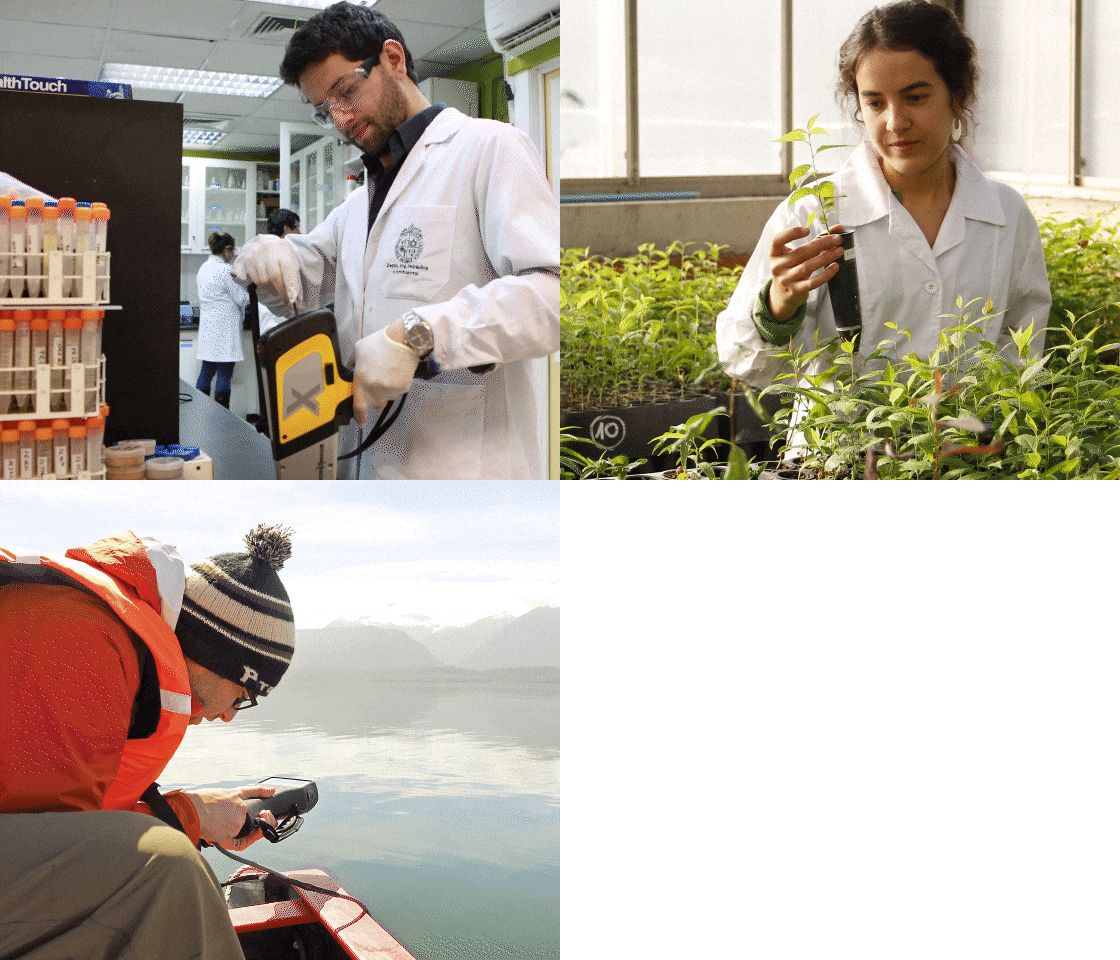
Avanza UC is a project of the UC 2026–2030 Strategic Plan that seeks to promote discovery, creation, and innovation projects.
Through interdisciplinary collaboration and engagement with national and international stakeholders, it contributes to expanding the frontiers of knowledge and providing solutions to the major challenges facing the country and the world.
What is Avanza UC?
Avanza UC is a flexible fund that promotes bold discovery, creation, and innovation projects led by University faculty, with impact and in alignment with the major challenges of the country and the world.
It seeks to promote projects that:
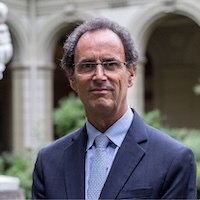
“Our faculty members must explore new areas, connect with international researchers, and open pathways. The knowledge that transforms the world is not born from repeating what we already know, but from daring to think differently. Avanza UC was born with that conviction.”
Juan Carlos de la Llera
Rector, Pontificia Universidad Católica de Chile
Collaborating institution networks
The following institutions have expressed their willingness to collaborate with Avanza UC projects, providing various resources and opportunities to strengthen national and international research and collaboration.
(*) This list will be updated periodically as new institutions join.
International institutions

Institutional support
Core institutional support of up to 50% of the amount funded by Pontificia Universidad Católica de Chile, or KRW 10,000,000 per awarded project, whichever is lower.
Areas of interest
Open to all areas and disciplines.

Institutional support
Core institutional support of USD 10,000 per awarded project, for a maximum of two awarded projects funded.
Areas of interest
Open to all research areas, including, but not limited to, disaster management, wildfires, resilience, underground mining, agriculture, and links with indigenous peoples.

Institutional support
Core institutional support will depend on the number of research teams applying to Avanza UC 2026.
Areas of interest
UQTR co-funding will be prioritized for Social Work projects and all disciplines related to Energy Transition, including Materials Science and Engineering. Applications from other areas and disciplines will also be accepted and may access UQTR co-funding depending on the number of proposals received.

Institutional support
Core institutional support of up to NZD 12,000 per awarded project, subject to an application to the University of Auckland’s Global Research and Engagement Fund (GREF) (see Fund Guidelines). GREF applications for co-funding will be evaluated in a closed call during September, before the closing of Avanza UC 2026.
Areas of interest
Priority will be given to applications that address one or more of the University of Auckland’s Signature Research Areas. However, proposals from all areas of knowledge, including emerging research lines, will be considered.

Institutional support
The University of Illinois Urbana-Champaign will provide co-funding (matching funds) of up to USD 35,000 for each awarded project.
Areas of interest
Open to all areas and disciplines.
Institutional support
Central-level support of up to USD 8,000 per awarded project, with a maximum of two projects.
Areas of interest
Open to all areas and disciplines.

Institutional support
Areas of interest

Institutional support
Areas of interest

Institutional support
(*) The project must have counterparts from both universities of La Triada.
Areas of interest

Institutional support
Areas of interest

Institutional support
Areas of interest

Institutional support
Areas of interest

Institutional support
Areas of interest

Institutional support
Areas of interest

Institutional support
Areas of interest
National institutions

Institutional support
Areas of interest
Institutional support
Area of interest
Who can apply?
You can apply if:
(*) Review the guidelines and all requirements at investigacion.uc.cl
You are a UC regular or special faculty member with at least 33 hours per week.
You have a bold discovery, creation, or innovation proposal that addresses relevant challenges for Chile and the world and contributes to expanding the frontiers of knowledge.
Your proposal strengthens national and international collaboration networks.
What are the research areas?
Avanza UC projects can be developed in the following areas:
Fundamental research and creation
Applied research and development
Arts and humanities
Sciences and technologies
If you are a University faculty member and your project
has potential for Avanza UC, then:
Review the guidelines and all documents
Check the technical specifications and competition requirements at investigacion.uc.cl.
Calendar
Publication of guidelines
June 30, 2026
Application opening
July 31, 2026
Application deadline
September 30, 2026
Publication of results
Late December
Avanza 2025 Impact
In its 2025 version, the awarded projects corresponded to research and creation initiatives covering all areas of knowledge: Natural Sciences, Engineering and Technology, Medical and Health Sciences, Agricultural Sciences, Social Sciences, and Humanities and Arts.
Submitted projects
Awarded projects
Proposals with international collaboration
Interdisciplinary projects
Transdisciplinary projects
Proposals to be executed in regions
Maximum amount awarded per project
Participation by Academic Units
This is how the participation of the different Academic Units in the projects awarded by Avanza UC 2025.
The area of each block is proportional to the number of awarded projects. Hover over each block to see the details.
Testimonials
Learn more about the impact of Avanza:
The project, led by Patricio de la Cuadra Banderas from the Institute of Music, together with Luis Antonio Prato Escárate from the School of Art, combines acoustics, physics, and artistic creation to develop new musical instruments, exploring different geometries, materials, and woods from Latin America from a scientific and cultural perspective.
Learn how this project, led by Mónica Antilén from the School of Chemistry, together with María Cristina Ravanal from the Faculty of Agronomy and Natural Systems, seeks to regenerate saline soils in northern Chile through biofertilizers, solar energy, and fog water.
Learn how this project, led by José Luis Almazán, academic director of CIM UC – CENAMAD, seeks to develop safer mass timber buildings against earthquakes and fires through seismic isolation and fire-resistant connectors.
This project, led by Pedro Alonso, from the School of Architecture, together with Rodrigo Escobar, from the School of Engineering, seeks to develop a sustainable research laboratory at the Alto Patache Fog Oasis (Tarapacá Region), integrating biogenic facades, fog catchers, solar energy, and a greenhouse.
The research led by Jenniffer Angulo, from the School of Medicine, together with Andreas Schuller, from the Faculty of Biological Sciences, uses artificial intelligence and computational tools to identify compounds with potential antiviral function against the Andes virus.
Learn how this project, led by Jorge Campusano and Evelyn Avilés from the Faculty of Biological Sciences, seeks to identify new biomarkers through spatial transcriptomics to understand the molecular mechanisms of obsessive-compulsive disorder and open new opportunities for its diagnosis and treatment.
This project, led by Ariel Lara from College UC, studies how different brain regions coordinate social memory, integrating neuroscience, artificial intelligence, and computational analysis to understand this function and its relationship with neuropsychiatric disorders.
Digital twins, led by Francisco Sahli Costabal from the School of Engineering and Guillermo Larios Goldenberg from the School of Medicine, uses artificial intelligence and ultrasound to develop digital twins of the infant heart to enable early detection of heart damage associated with obesity.
The research led by Jenniffer Angulo from the Faculty of Medicine and Andreas Peter Schuller from the Faculty of Biological Sciences combines artificial intelligence and virology to identify molecules capable of blocking Andes hantavirus infection and advance towards future antiviral treatments.
Learn about this research, led by Faculty of Arts professor Miguel Farías, which explores new ways of understanding Latin American identity through literature, music, and sound experimentation from an interdisciplinary perspective.
Discover how this project, led by Faculty of Social Sciences professor Andrea Canales, studies the impact of information on decisions regarding access to higher education, providing evidence to strengthen more equitable public policies.
Learn how this project, led by Faculty of Chemistry and Pharmacy professor Mónica Antilén, transforms organic waste into biofertilizers to recover degraded soils through a sustainable model that integrates circular economy, solar energy, and interdisciplinary collaboration.











Contact
For questions or inquiries, contact the Research Directorate of the Vice-Rectorate for Research and Graduate Studies.